
Osteopathic Touch Foundations.
Listening Hands, Body Reading & Safe Manual Entry Points
LEVEL 1 · LISTENING · WAITING LIST OPEN
The first step in the OTP journey is not another technique. It is learning how to enter the body, what to listen for, and how what you feel begins to shape the clinical decision that follows.
Where you are in the journey
Level 1 - Listening
Level 2 - Regulation
Level 3 - Internal Connection
Level 4 - Manual Toolbox
Masterclass - Full Clinical Integration
LEVEL 1 FOUNDATION
A practical foundation course designed for physiotherapists who want to evolve their manual therapy skills into a more osteopathic way of thinking and touching. The course begins with osteopathic listening and refined palpation, then gradually explores fascia, nervous system regulation, breathing, pelvic-spinal relationships, and introductory osteopathic concepts, including carefully selected cranial and visceral principles, within a physiotherapy-safe clinical framework.
The Three Shifts
From Techniques to Listening.
From Pain Location to Body System.
From History to Story.
The goal is not to ignore symptoms or medical history. It is to learn how to connect them to the body’s wider clinical story before deciding where your hands should begin.
Your Hand After OTP Level 1
A different hand begins with a different decision.
Think beyond the site of pain.
Refine palpation and hands-on awareness.
Observe before intervening.
Recognize protection, compensation and body relationships.
Choose a more meaningful clinical starting point.
Connect palpation findings to treatment decisions.
Reassess with purpose.
Apply practical osteopathic concepts in the next clinical session.
Clinical Takeaways
A more refined clinical entry point.
A clearer way to connect body findings.
A calmer and more intentional hand.
A stronger reason behind each manual decision.
More purposeful reassessment.
Greater confidence deciding what comes next.
COURSE INFORMATION
Level 1 - Osteopathic Touch Foundations.
8–9 October 2026. Riyadh, Saudi Arabia. Exact venue shared with confirmed participants. Limited to 20 participants to support individual hands-on observation and correction. SAR 1,500. WAITING LIST OPEN
WHAT’S INCLUDED
Certificate of Completion
Printed Course Handbook
Learning Materials
Refreshments
Cancellation and refund terms will be communicated as part of the official registration terms.
THE FOUNDATION
What we begin to read.
Touch
Listening
Palpation
Fascia
Spinal relationships
Breathing
Pelvic relationships
Nervous-system regulation
Introductory cranial principles
Introductory visceral principles
The purpose is not to master every system in Level 1. The purpose is to begin understanding how these systems can influence where the clinician looks, listens and starts.
Why Should Physiotherapists Understand Cranial & Visceral Osteopathy?
Because the body does not organise itself according to clinical specialties.
Breathing, pressure, nervous-system regulation, fascial continuity, internal mobility and musculoskeletal function can influence one another.
Level 1 does not attempt to make participants cranial or visceral Osteopathic Practitioners. It introduces selected principles so physiotherapists can begin recognising these relationships within a safe clinical reasoning framework.
SIGNATURE LEARNING ELEMENTS
Some concepts need to be felt before they can be understood.
Half-Riyal Touch - Revealed inside the room.
Before / After Hand - Feel the difference before explaining the difference.
Thread Map - A way to begin connecting what appears separate.
Locked Box - A clinical reasoning experience revealed inside the room.
Live Hand-Cam Demonstration - Clear close-up observation of hand position, pressure and contact during practical demonstrations.
Osteopathy Passwords™ - Three memorable clinical anchors that remain hidden until the course begins.
SIGNATURE LEARNING ELEMENT
Three passwords. One Level.
Across Level 1, three memorable clinical shortcuts will appear at specific moments throughout the course. They are designed to make complex osteopathic ideas easier to remember and bring back into the clinic.
?
?
?
3 Passwords per Level × 5 Levels = 15 Osteopathy Passwords
INSIDE THE ROOM
This is a hands-on course.
Live Clinical Demonstrations
Guided Hands-On Practice
Small-Group Practical Labs
Clinical Reasoning Discussions
Live Hand-Cam Observation
Realistic Clinical Scenarios
Continuous Reassessment
Immediate Clinical Application
The goal is not simply to watch techniques. You will practise the hand, the reasoning and the reassessment that sit around them.
IMPORTANT
Know what you are joining.
Level 1 is not a shortcut to becoming an Osteopathic Practitioner.
It is not a protocol-based workshop.
It is not a replacement for physiotherapy.
It is not a collection of isolated techniques.
It is the foundation of a five-level journey designed to integrate osteopathic thinking, touch and clinical reasoning into the professional identity of the physiotherapist.
BEFORE YOU JOIN
A Note Before You Join
From Abdulaziz Tubbal, Creator & Lead Instructor
Why OTP exists, what it is - and what it is not.
Watch Before You Join
WHO IT IS FOR
Experienced physiotherapist looking to expand hands-on treatment approaches.
Physiotherapist looking to understand the body as one integrated whole.
Physiotherapist seeking better clinical results in cases that do not respond to conventional protocols.
Physiotherapy intern or final-year student with a strong passion for manual therapy.
COURSE FORMAT
2 Practical Days
Approximately 16 Training Hours
Hands-On Focus
Small-Group Practical Experience
Teaching Language
Delivered in Arabic, with key clinical and osteopathic terminology in English.
Creator & Lead Instructor, OTP
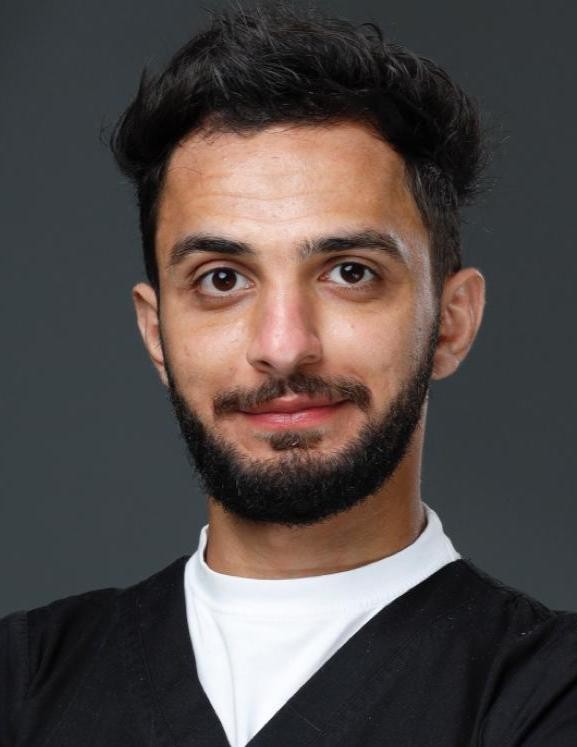
Abdulaziz Tubbal
Physiotherapist & Osteopathic Practitioner
Abdulaziz Tubbal is a Physiotherapist & Osteopathic Practitioner whose clinical work bridges physiotherapy, osteopathic thinking, and hands-on practice. He holds a Bachelor of Science in Osteopathy with Honours, with training spanning structural, cranial, and visceral osteopathic approaches alongside manual therapy and rehabilitation.
Over years of clinical practice, his approach has evolved beyond isolated techniques toward reading the body as an integrated system, refining the quality of touch, and using what the hands perceive to guide clearer clinical decisions.
OTP was created to translate this approach into a practical learning journey for physiotherapists, helping them develop more intentional touch, stronger body-reading skills, and a clearer rationale for where to begin and how to reassess.
WHAT COMES NEXT
Listening comes before regulation.
Level 1 - Listening
Level 2 - Regulation
Level 1 builds the hand and the entry point. Level 2 begins exploring quieter contact, cranial principles and nervous-system regulation in greater depth.